In the rapidly expanding global tourism and commercial recreation sector, amusement inflatables have transcended from basic play structures to highly engineered commercial assets. To achieve sustainable ROI, international amusement parks, municipal entities, and premium rental enterprises demand structural durability, material safety, and custom aesthetic flexibility. This whitepaper systematically evaluates the criteria required to engineer superior-grade inflatables and outlines the supply-chain efficiencies, technological progressions, and regulatory compliances maintained by industry leaders.
Established in 2012, our organization has spent over 12 years integrating trade and advanced manufacturing processes to produce cutting-edge, high-durability inflatables. Our manufacturing thesis hinges on a fundamental principle: aerodynamic precision and physical integrity are non-negotiable.
Every project begins with severe scrutiny of raw materials and structural stress limits. We understand that in commercial operation, structural fatigue is the enemy of profitability. Consequently, our engineers subject all internal baffles, dynamic seams, and anchor frameworks to rigorous mechanical loading tests, ensuring they withstand sustained wind forces, intense sunlight, and heavy cyclic pressure over multi-year lifecycles.
Modern B2B buyers navigate complex safety regulations and environmental guidelines. Our manufacturing ecosystem uses non-toxic, eco-friendly PVC composites, engineered to perform under extreme ambient temperatures without emitting harmful volatile organic compounds (VOCs).
We strictly use 100% lead-free, cadmium-free, and phthalate-free commercial-grade PVC. All raw materials conform to global environmental baselines, remaining soft, pliable, and odorless in sub-zero or high-heat environments.
Our engineering protocols have successfully qualified our entire product catalog for key regulatory markings, including CE directives, ISO9001 Quality Management System, and EN14960 compliance.
Rather than relying solely on sewing thread, our high-tension seams feature automated high-frequency hot-air welding to guarantee perfect containment of air under dynamic kinetic impacts.
Operating at the cutting edge of industrial smart manufacturing, our facility implements advanced automation pipelines to eliminate human error, enhance dimensional accuracy, and keep prices highly competitive for global importers.
Our core asset is our facility, run by a dedicated team of over a hundred skilled professionals and specialized support personnel. By introducing smart manufacturing workflows, we've optimized every stage of production:
By consolidating localized raw material supply networks and investing in high-efficiency machinery, we protect our international clients against volatile lead times and excessive shipping costs.
High search authority requires quantifiable transparency. The scale of our active deployments across diverse B2B recreation sectors demonstrates our dedication to reliable commercial manufacturing:
Amusement inflatables are not a single-category product. Diverse applications require specific structural, chemical, and pressure configurations to perform reliably in their respective environments.
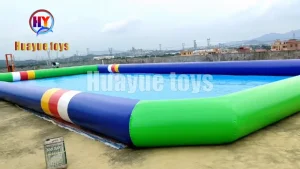
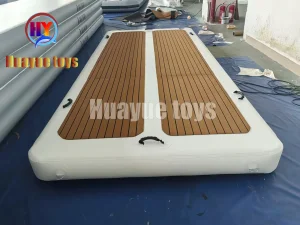
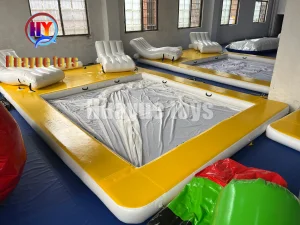
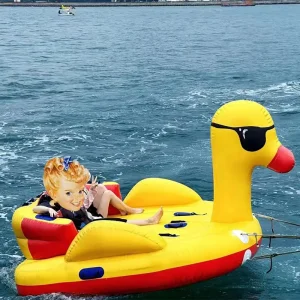
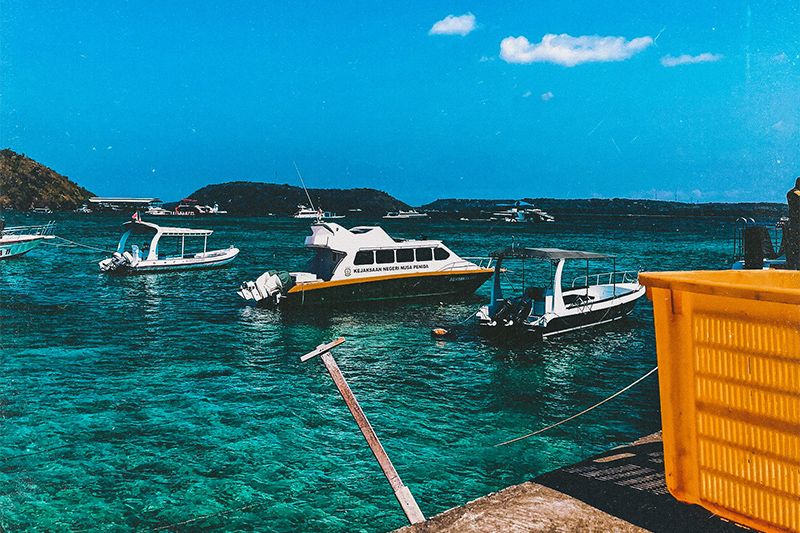
Exposed to constant UV radiation, thermal expansion, and salt water, these products use thick 0.9mm PVC with high-performance anti-UV coatings and marine-grade 316 stainless steel anchor points to resist oxidation and tearing under constant wave movements.
Engineered for predictable rebound kinetics and optimal shock absorption. Air foam pits and tracks use double-wall drop-stitch cores (tens of thousands of polyester threads per square meter) to absorb heavy impacts, protecting athletes during intensive landings.
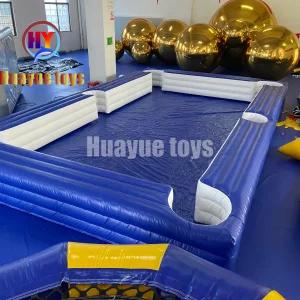
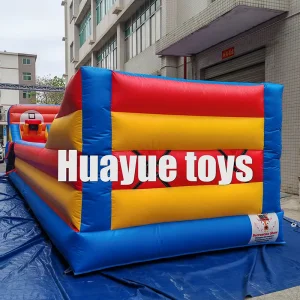
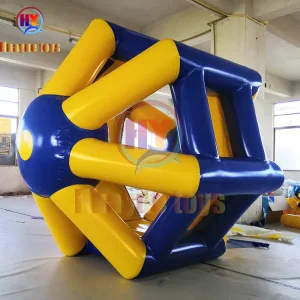
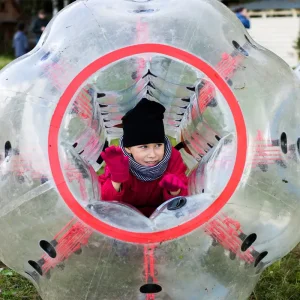
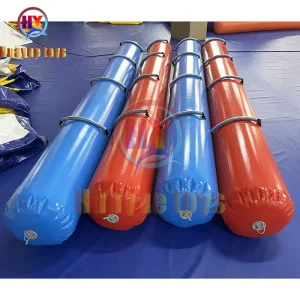
Designed for high turnover, rapid inflation/deflation, and compact transportation. Bungee runs, bumper balls, and obstacle courses use friction-resistant PVC that packs down tightly, reducing logistics costs and setup times for operators.
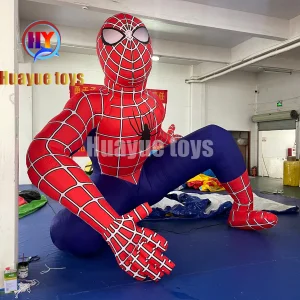
Every entertainment space has unique spatial and aesthetic constraints. Our organization offers a structured OEM and ODM development pipeline, translating client requirements from initial concepts into structurally verified inflatable structures.
Whether it's light logo customization or highly complex, large-scale amusement park projects, we adapt to our clients' precise operational constraints. Our corporate philosophy focuses on establishing long-term, mutually successful partnerships based on exceptional manufacturing and reliable service.
Our dedicated project managers guide you through every stage of development, ensuring all custom specifications are precisely documented:
As a forward-thinking manufacturer, we track emerging industry technologies to make our inflatables safer, lighter, and more energy-efficient.
We are testing IoT-enabled sensor nodes that monitor internal air pressure in real time, alerting operators via mobile networks if pressure drops below safe thresholds, minimizing risk.
We are exploring recyclable TPU (Thermoplastic Polyurethane) alternatives that offer superior tear resistance, operate well in extreme cold, and reduce carbon footprints during recycling.
Using Computational Fluid Dynamics (CFD) software, our engineering team designs internal baffles to optimize air distribution, reducing blower power requirements by up to 15% without losing structural rigidity.
Importing commercial inflatables requires compliance with strict safety and electrical codes. We ensure our products meet local safety requirements, helping you navigate legal compliance and operator liabilities smoothly.
Operating uncertified inflatables can void liability insurance and expose owners to legal penalties. We mitigate this by providing detailed compliance documentation for every region:
Additionally, we offer localized maintenance resources, heavy-duty repair kits (color-matched vinyl patches, specialized adhesives), and step-by-step video training for setup and storage. This support extends the operational lifespan of your investment and keeps your guests safe.
Direct answers to the most common questions raised by B2B buyers, procurement officers, and engineering teams during the sourcing process.
 Huayue Toys