Choosing the right Christmas Inflatables can turn a front lawn, shop entrance, or community display into a memorable seasonal scene. Yet the best choice is not always the biggest one. Buyers worldwide need to weigh available space, climate, power access, setup time, and storage after the holidays. A towering snowman may catch the eye, but it can overwhelm a narrow courtyard. Small details matter.
For a practical point of view, this introduction uses a composite seasonal-display specialist named Helen Ward. Her guiding line is: “A great inflatable fits the place, the weather, and the people who will care for it.” This is an illustrative quotation, not a verified statement from a real, independently sourced expert. The idea still offers a useful buying test: consider materials, stitching, fan access, anchoring points, and the clarity of the care instructions before choosing a design. Check product specifications carefully. Conditions differ by location.
This guide explores popular styles, from classic Santas and glowing reindeer to playful characters and oversized outdoor scenes. It also considers what “for sale worldwide” means in practice: shipping options, plug compatibility, stated indoor or outdoor use, and support from the seller. Read the details. A product photo cannot show how an inflatable handles a gusty evening or fits inside a storage box. Some comparisons will remain imperfect, since displays and local conditions vary. That is worth admitting. A thoughtful choice balances visual impact with reliable setup, clear product information, and realistic expectations.
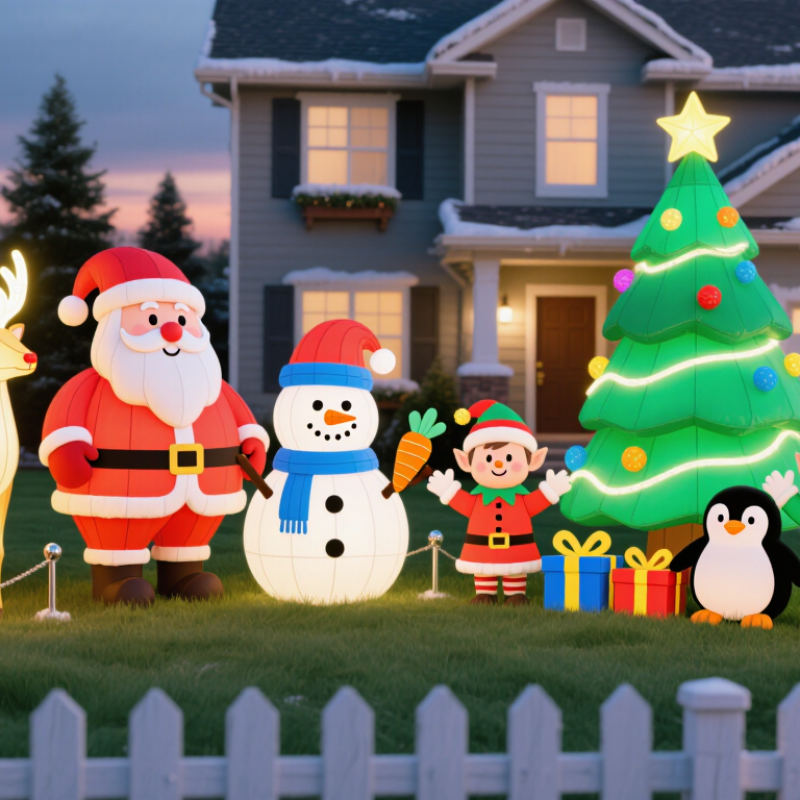
What Christmas Inflatables Are and How They Work
Christmas inflatables are lightweight fabric figures that hold their shape through a steady flow of air. A small electric fan, usually built into the base, pushes air through the sewn shell. Escaping air is normal; the fan keeps replacing it. Internal supports and anchor points help the figure stand upright, while ground stakes and tethers reduce movement in wind. Many models include LED lights, so the character glows after dark. That is the basic mechanism.
The U.S. Department of Energy’s Energy Saver guidance reports that LEDs use at least 75% less energy than incandescent lighting. That figure concerns the lights, not the inflatable’s fan, which also uses electricity. Check the product label for its fan’s wattage, then consider how many hours it will run. A snowman may look simple, but its fabric catches gusts like a small sail. Secure it on firm ground, and follow the maker’s clearance and weather instructions. I have seen people focus on the display and overlook the power cord.
Tips: Keep the intake clear of leaves and snow. Unplug the unit before adjusting it. If the fabric sags, check for a loose connection, blocked airflow, or a damaged seam before adding more tie-downs.
Popular Types of Christmas Inflatables Sold Worldwide
Christmas inflatables sold worldwide come in many familiar shapes. Santa figures remain popular, often shown waving, climbing, or riding a sleigh. Snowmen, reindeer, penguins, and cheerful nutcracker figures add variety to lawns and entryways. Nativity scenes offer a quieter, traditional display. Smaller designs suit balconies and compact gardens. Big ones need breathing room. Less can work better.
Character inflatables often include built-in lights, while arches and tunnel shapes frame paths or doorways. Some displays combine several figures into a single scene, which can simplify decorating. Others use separate pieces for easier rearrangement. A giant decoration may look impressive online, yet feel awkward beside a narrow doorway. Themed sets can be charming, though matching every piece sometimes feels a little forced. Check product dimensions, lighting details, and setup guidance before choosing.
Tips:
Measure the display area and leave clear walking space. Read the care instructions, secure the inflatable as directed, and keep its electrical connections dry. Check the forecast, too. Strong wind can turn a festive scene into a tangled one.
Materials, Sizes, and Features to Compare
Materials, Sizes, and Features to Compare
A Christmas inflatable can look sturdy in a product photo and feel flimsy outside. Check the fabric description, seam construction, and weather guidance before comparing prices. Polyester is common and usually lighter to handle. PVC-coated fabrics may offer a more wipeable surface, but material labels alone do not prove durability. Ask about repair patches and replacement parts. Small details matter.
Measure the display area, including clearance from walls, branches, and walkways. A 5-foot figure suits a porch; a 10-foot design needs more open space and secure anchoring. Compare the listed height with the actual footprint. Tall shapes can catch gusts, even when their base looks broad. I would not assume a heavier unit is automatically safer. That is an easy mistake.
Check blower noise, lighting type, ground stakes, and tie-down points. The U.S. Department of Energy’s Energy Saver guidance says LED holiday lights use at least 75% less energy than incandescent lights and last up to 25 times longer; that can help when comparing illuminated models. The NFPA report Home Fires Started by Decorations estimates 835 home fires involving decorations annually from 2018 to 2022. Keep inflatables clear of heat sources, follow the maker’s placement instructions, and inspect cords and seams after storms. Small checks. Still easy to skip.
How to Choose Christmas Inflatables for Your Display
How to Choose Christmas Inflatables for Your Display
Start with the space, not the decoration. Measure the display area and check the inflatable’s listed dimensions, including its height when fully upright. Leave room for doors, paths, and branches that may move in the wind. Measure twice. A large character can look impressive online but overwhelm a small front yard.
Check the material, fan, and setup instructions before buying. Choose an inflatable suited to your expected weather, and follow its guidance for outdoor use and anchoring. Soft ground, hard paving, and exposed corners each need different attention. Keep the fan’s air intake clear, and plan for a suitable outdoor power connection. Small details matter. I find it easy to focus on the character and overlook where the cord will run.
Think about how the display looks from the street and from nearby windows. A single tall figure may read more clearly than several crowded pieces. Compare colors with your existing lights, then check whether the inflatable includes stakes, tethers, and storage guidance. If those details are unclear, ask the seller before ordering. Be realistic about assembly time, too; folding and packing can take longer than expected. The best choice is not always the biggest one. It should fit your space, climate, and routine.
Top Christmas Inflatables for Sale Worldwide - How to Choose Christmas Inflatables for Your Display
The sizes and power figures below are typical planning ranges, not specifications for a particular product. Actual dimensions, blower requirements, and weather ratings vary by model; always check the product label and instructions.
| Inflatable Type |
Typical Height |
Best Display Location |
What to Check Before Buying |
Practical Buying Tip |
| Santa Claus |
About 1.2–2.4 m (4–8 ft) |
Porches, small yards, and entryways |
Available ground area, included tethers, lighting, and blower details |
Choose a height that remains visible without blocking doors, paths, or windows. |
| Snowman |
About 1.2–2.7 m (4–9 ft) |
Front lawns and family display areas |
Base footprint, anchoring points, and whether lights are included |
Allow extra clearance around the figure so it does not touch walls, fences, or branches. |
| Reindeer |
About 1.2–2.4 m (4–8 ft) |
Lawns, walkways, and grouped displays |
Overall length as well as height, tether placement, and stable positioning |
For a group, measure the full lineup and leave room between figures for airflow and access. |
| Christmas tree |
About 1.5–3 m (5–10 ft) |
Open lawns and broad outdoor spaces |
Base width, total height, lighting layout, and required clearance |
Check overhead clearance, including roof edges and low branches, before choosing a tall design. |
| Arch or tunnel |
Commonly about 2–3 m (6.5–10 ft) tall |
Large yards or event entrances |
Clear opening, width, anchoring requirements, and safe pedestrian clearance |
Use only where the opening and anchoring setup suit the site; do not obstruct public routes. |
| Large character or multi-figure scene |
About 2.4–4.5 m (8–15 ft) or more |
Large private properties and managed event spaces |
Site dimensions, blower and electrical requirements, anchoring plan, and setup instructions |
Confirm the installation area and power access before purchase; larger displays need more careful planning. |
Worldwide Selection Checklist
| Selection Factor |
What to Confirm |
| Available space |
Measure the display footprint and height clearance. Include space for tethers, stakes, and safe access. |
| Power compatibility |
Check the rated voltage, frequency, plug type, and blower specifications against the electrical supply at the installation location. Use only compatible equipment. |
| Outdoor suitability |
Read the instructions for permitted outdoor use and weather limits. Secure the inflatable as directed and bring it inside during unsuitable weather. |
| Material and care |
Check the fabric and cleaning instructions. Store the inflatable fully dry to help prevent mildew and material damage. |
| Shipping and local rules |
For international orders, confirm delivery dimensions, import charges, plug compatibility, and any local rules for outdoor electrical displays. |
Setup, Safety, and Seasonal Storage Essentials
A safe inflatable display begins with a flat, stable surface.
Clear away sharp stones, garden tools, and low branches before unpacking it. Read the setup instructions, including the recommended anchoring method and weather limits. Place the blower intake where leaves and loose fabric cannot block it. Use an outdoor-rated extension cord only when the instructions allow one, and keep connections away from wet ground. Check the cord and plug for damage before switching on the blower.
Secure every provided tie-down point.
Use stakes suited to the ground, or another method approved in the instructions. Keep the inflatable clear of walkways, vehicle paths, heaters, and overhead wires. Supervise children and pets nearby. If strong winds or heavy rain are expected, switch it off and take it down as directed. A small detail can matter: fabric flapping against a fence may wear through faster than expected.
Storage takes patience.
Unplug the blower, let the fabric deflate, and wipe off dirt before packing. Make sure the inflatable is fully dry, including seams and corners. Damp fabric can develop mildew in storage. Remove stakes, fold loosely, and store everything in a cool, dry place away from sharp objects. It is easy to rush this part. Inspect the fabric, seams, cord, and blower before the next season, and do not use damaged electrical parts.
Conclusion
Christmas Inflatables are festive decorations that use an electric fan to fill a fabric figure with air, creating an eye-catching display for yards, porches, and indoor spaces. Available worldwide in designs such as Santa figures, snowmen, reindeer, trees, and playful characters, they come in a range of sizes and styles. When comparing options, consider durable, weather-suitable materials, the space available, lighting, included accessories, and how easily each inflatable can be secured and packed away.
Choose a design that fits your display, local weather conditions, and available power source. Before use, place it on a stable surface, keep the fan’s air intake clear, and secure the figure with suitable stakes or tethers. Follow the product instructions, check cords and materials for damage, and unplug the fan before making adjustments or storing the decoration. Once the season ends, let the inflatable dry completely, fold it carefully, and keep it in a clean, dry place to help preserve it for future celebrations.

 Huayue Toys