7 Tips for Choosing a Hypalon Inflatable Boat?

Time:2026-10-01 Author:Sophia
0%

Choosing a Hypalon Inflatable Boat is rarely just a matter of comparing prices and color options. The right decision depends on fabric quality, tube construction, air retention, floor design, weight, capacity, and after-sales support. A boat may look impressive beside a showroom window, yet feel unstable when loaded with fuel, coolers, fishing gear, and passengers. Real use exposes weaknesses quickly.

RIB designer Nigel Irens has often emphasized a practical design principle: “Keep the boat simple, strong, and easy to handle.” That idea fits every Hypalon Inflatable Boat purchase. Look closely at the seams. Check whether the fabric feels dense and flexible, not brittle or overly glossy. Ask about the denier, coating, valve quality, repair process, and warranty conditions. Measure the packed size before buying; a boat that cannot fit your vehicle or storage space becomes an expensive inconvenience. Think about the water, too. Calm lakes, rocky shorelines, saltwater, and long coastal trips demand different features.

No checklist is perfect.

These seven tips will help you compare models with clearer judgment: inspect the Hypalon fabric, verify construction quality, assess stability, confirm load capacity, examine portability, research maintenance needs, and evaluate the manufacturer’s reputation. I would not pretend that the most expensive boat is always the best. Sometimes, a simpler model with stronger seams and dependable support will serve you longer. Take photos, ask uncomfortable questions, and imagine using the boat on a wet, windy morning. That is where honest value appears.
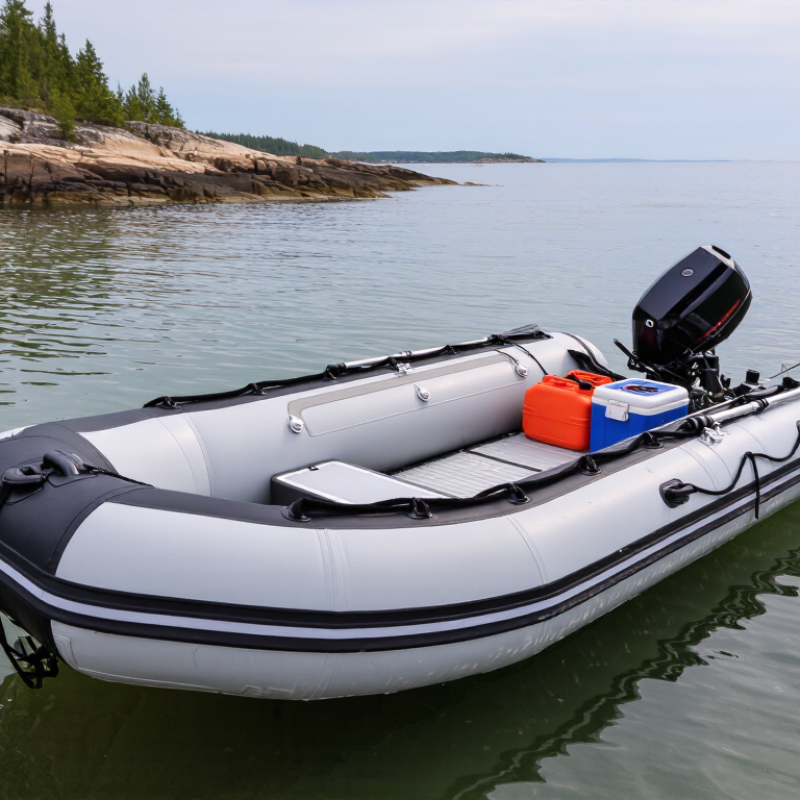
7 Tips for Choosing a Hypalon Inflatable Boat?

Define CSM (Hypalon) Fabric and Its Typical 0.7–1.2 mm Thickness

7 Tips for Choosing a Hypalon Inflatable Boat

CSM, commonly called Hypalon, is a synthetic rubber used for durable inflatable boat fabric. Its full name is chlorosulfonated polyethylene. The material resists ultraviolet light, ozone, saltwater, and many common chemicals. That matters when a boat spends long hours beside a dock or on open water. Typical CSM fabric measures about 0.7–1.2 mm thick. Thinner fabric can reduce weight. Thicker fabric usually improves abrasion resistance and structural confidence.

Check the fabric thickness before comparing prices. Ask whether the stated measurement includes the coating and supporting textile. Examine seams closely, because excellent fabric cannot rescue weak bonding. Look for even layers, clean edges, and consistent surface texture. Press the tube gently. It should feel firm, not brittle or strangely soft. Also inspect valves, handles, protective strips, and the transom connection. These small areas often reveal manufacturing quality.

Choose a thickness that matches real use. A 0.7 mm fabric may suit lighter recreational transport and careful handling. Around 1.0–1.2 mm is more suitable for frequent launching, rocky shorelines, or heavier equipment. More thickness is not automatically better. It can add weight and make packing harder. I have seen buyers focus on thickness and overlook poor seam finishing. That was a costly mistake. Ask for repair guidance, storage instructions, and material specifications in writing. Good documentation supports a more reliable decision.

7 Tips for Choosing a Hypalon Inflatable Boat: CSM Fabric Thickness Guide

CSM, commonly known as Hypalon, is a chlorosulfonated polyethylene rubber used as a durable coating for inflatable-boat fabric. The typical CSM thickness range is approximately 0.7–1.2 mm. The chart shows the equivalent thickness in mils, using 1 mm = 39.37 mils.

Selection tip: Thinner fabric can reduce weight and improve portability, while thicker fabric generally provides more material for abrasion and puncture resistance. Final performance also depends on the base fabric, denier, seam construction, coating quality, and intended operating conditions.

Compare 1100–1680 Denier Reinforcement and Tensile-Strength Ratings

A Hypalon inflatable boat should be judged by reinforcement, not appearance alone. The common 1100–1680 denier range describes yarn weight, not complete fabric strength. A 1680D cloth may resist abrasion better, but coating quality and weave still matter. Check the technical sheet for warp and weft tensile ratings. ISO 1421 and ASTM D5034 are widely used methods for reporting textile tensile performance. Results should show the test direction, unit, and conditioning process.

Tip 1: Compare like with like. A rating of 2,500 N/5 cm means little without the same test standard. Ask whether the figure applies to coated fabric or uncoated reinforcement. Small details matter.

Tip 2: Match denier to use. For calm-water recreation, well-made 1100D fabric can reduce weight and improve handling. For rocky launches, frequent transport, or commercial work, 1680D reinforcement may offer a safer abrasion margin. It is not automatically stronger in every direction. I have seen buyers choose the heavier cloth and overlook weak seams. That is an expensive mistake.

Tip 3: Inspect the evidence. Request recent laboratory data, not only marketing claims. Look for tensile strength, tear strength, seam strength, UV resistance, and coating adhesion. ASTM and ISO figures are useful only when the laboratory method is stated. Industry testing guidance repeatedly stresses controlled methods and comparable samples. Do not compare a dry, new sample with aged material. That comparison is unfair. Tensile ratings can also fall after heat, sunlight, and repeated folding.

Check UV, Fuel, and Chemical Resistance for Long-Term Marine Use

7 Tips for Choosing a Hypalon Inflatable Boat?

A Hypalon-type inflatable boat should handle strong sunlight without becoming brittle or faded. Ask for tested UV-resistance data, not only general sales language. Inspect the coating closely, especially around the tubes, floor joints, handles, and valve areas. These sections receive heat, friction, and repeated bending. A durable fabric still needs shade and regular cleaning. UV resistance slows damage; it does not stop aging.

Fuel resistance matters when portable tanks or engines are onboard. Look for material data covering gasoline, diesel, and common marine oils. A small spill should not immediately soften the surface or weaken the adhesive. Wipe spills quickly with clean water and a suitable mild cleaner. Avoid harsh solvents unless the manufacturer confirms compatibility. Chemical resistance also includes saltwater, detergents, sunscreen, and battery-area residue. I once focused too much on fabric thickness and overlooked seam protection. That was a poor judgment.

Request independent test results when possible. Check whether testing covers sunlight, temperature changes, flexing, and chemical exposure. A sample piece can reveal surface swelling, tackiness, color loss, or cracking after contact. Do not rely on a showroom appearance alone. Ask how repairs affect fuel and UV resistance. Adhesives and patches may age differently from the main fabric. Marine use is rarely gentle. A boat may look sound while hidden seams slowly lose strength. Regular inspections help expose that problem early.

7 Tips for Choosing a Hypalon Inflatable Boat? - Check UV, Fuel, and Chemical Resistance for Long-Term Marine Use

No. Selection Dimension What to Check Practical Data or Rating Why It Matters for Long-Term Marine Use
1 UV and Weather Resistance Confirm that the fabric uses a chlorosulfonated polyethylene coating, commonly called CSM or Hypalon, and inspect seams for chalking, cracking, or fading. High resistance
CSM is generally more resistant to sunlight, ozone, and weathering than many basic rubber-coated fabrics.
Strong UV resistance helps reduce surface hardening, discoloration, and coating deterioration. Store the boat shaded and clean even when the fabric has high UV resistance.
2 Fuel and Oil Resistance Ask for documented resistance to gasoline, diesel fuel, lubricating oil, and accidental short-term spills. Check whether the fuel-contact area has reinforced or replaceable protection. Good to high resistance
CSM generally tolerates petroleum-based fuels and oils better than natural rubber.
Fuel resistance reduces swelling, softening, and adhesive failure around tanks, engine mounts, and repair areas. Wipe spills away promptly rather than relying only on material resistance.
3 Chemical and Saltwater Resistance Review compatibility with seawater, mild detergents, diluted acids or alkalis, and common cleaning products. Avoid unverified exposure to strong solvents. High for seawater
Good resistance to ozone, saltwater, and many diluted chemicals; compatibility varies with concentration and exposure time.
Proper chemical compatibility helps preserve airtightness and coating adhesion. Rinse with fresh water after saltwater use and use only manufacturer-approved cleaners.
4 Fabric Weight and Reinforcement Check the denier of the polyester or nylon base cloth, coating thickness, rubbing strips, keel protection, and high-wear reinforcement. Typical durable range:
Approximately 1,000–1,500 denier for many heavy-duty inflatable applications, subject to design and construction.
A heavier base fabric can improve abrasion and tear resistance, but it also increases weight. Reinforcement in high-contact zones is often more important than fabric weight alone.
5 Seam Construction and Bonding Inspect whether seams are properly overlapped, heat-welded, or chemically bonded for the selected fabric. Look for even seam width, no bubbles, and no lifting edges. Critical quality factor
Seam performance depends on the coating system, adhesive process, surface preparation, and workmanship.
A highly resistant fabric can still fail if seams are poorly prepared or bonded. Request pressure testing and examine seam areas before purchase.
6 Operating Temperature Check the supplier's service-temperature range and consider tropical sun, cold-water launching, winter storage, and rapid temperature changes. Verify the stated range
Many coated-fabric systems are designed for broad marine temperature conditions, but exact limits depend on the formulation and adhesive.
Temperature affects air pressure, flexibility, and adhesive performance. Do not overinflate a hot boat, and check pressure again after significant temperature changes.
7 Maintenance, Repair, and Storage Confirm repair-kit compatibility, valve availability, patching instructions, cleaning guidance, and storage requirements. Check the boat for slow leaks before every trip. Low maintenance, not maintenance-free
Regular rinsing, drying, inspection, and shaded storage remain necessary.
Routine care prevents salt deposits, mildew, abrasion, and hidden seam damage. Store dry, loosely rolled or supported as instructed, and away from sharp objects and chemical vapors.
Important: “Hypalon” is a commonly used name for CSM-coated fabric. Exact UV, fuel, chemical, temperature, and seam performance depends on the specific fabric construction, coating formulation, adhesive system, and manufacturing process. Always compare the supplier’s technical data and care instructions before purchase.

Match Tube Pressure, Load Capacity, and ISO 6185 Classification

7 Tips for Choosing a Hypalon Inflatable Boat

Match Tube Pressure, Load Capacity, and ISO 6185 Classification

Tip 1: Check the recommended tube pressure before comparing boats.

A pressure gauge is essential because touch alone can mislead. Underinflated tubes flex excessively and reduce stability. Overinflation can stress seams, especially under strong sunlight. Follow the manufacturer’s pressure range, then recheck it after temperature changes.

Tip 2: Calculate the real load, not just the advertised capacity.

Include passengers, fuel, battery, safety equipment, and fishing gear. A boat rated for six people may feel crowded with six adults and supplies. Leave practical reserve capacity. I have learned that neat calculations can still overlook wet clothing, coolers, and changing weather.

Tip 3: Confirm the ISO 6185 classification on the documentation plate or technical file.

The classification should suit the boat’s length, intended use, propulsion, and operating conditions. Do not treat the standard as a decoration. Compare its stated limits with your planned waters and engine power. Ask for supporting documents when details seem vague.

Tip 4: Inspect the Hypalon fabric and workmanship closely.

Look for even seams, reinforced attachment points, secure valves, and protected rubbing areas. Ask how repairs are performed and whether replacement parts remain available. A durable coating helps, but careless storage can still shorten its life. That part is easy to forget.

Tip 5: Test the floor, handles, drain system, and lifting points before purchase.

Small discomforts become serious during long trips. Choose a layout that keeps weight balanced and equipment reachable. Take photographs of specifications and fittings. Memory is unreliable, especially after comparing several boats.

Evaluate Seams, Valves, Warranty, and Repairs Before Buying

Before buying a Hypalon inflatable boat, inspect every seam under bright, direct light. Look for lifting edges, uneven adhesive, bubbles, or fabric wrinkles near high-stress areas. Run your fingers along the floor seams and tube joints. They should feel firmly bonded, not soft or raised. A properly finished seam often reveals careful workmanship. However, appearance alone can mislead. Ask how the seams were prepared, bonded, and tested.

Valves deserve the same attention. Inflate the boat fully, then listen closely around each valve for escaping air. Apply mild soapy water and watch for growing bubbles. Check that valve caps fit tightly and that the inflation adapter does not twist the valve stem. Small leaks become serious during a long trip. A pressure test overnight can reveal problems that a quick showroom inspection misses. It is not exciting, but it matters.

Read the warranty before paying, not after a failure. Confirm coverage for seams, valves, fabric, and labor. Ask whether transport costs, accidental damage, and sun exposure are excluded. Request the repair process in writing, including expected turnaround times and available replacement parts. A useful repair kit should match the boat’s fabric and adhesive system. Do not assume every patch compound is compatible. The wrong repair can weaken the surrounding material. I have seen buyers focus on color and price, then regret ignoring service access. No inspection is perfect. Leave room for that uncertainty, and keep photos of the boat’s condition at delivery.

FAQS

What is CSM fabric used for in inflatable boats?

CSM is a durable synthetic rubber fabric. It resists ultraviolet light, ozone, saltwater, and many common chemicals.

What thickness is typical for CSM inflatable boat fabric?

Common thicknesses range from 0.7 to 1.2 millimeters. Check whether the measurement includes coatings and supporting textile.

Is thicker CSM fabric always better?

Not always. Thicker fabric usually resists abrasion better but adds weight and makes packing harder.

Which thickness suits light recreational use?

Around 0.7 millimeters may suit careful handling and lighter transport. Avoid dragging the boat over rough ground.

When is 1.0 to 1.2 millimeter fabric more suitable?

It suits frequent launching, rocky shorelines, and heavier equipment. The extra material can provide greater abrasion resistance.

How should I inspect the seams before buying?

Use bright, direct light. Look for lifting edges, bubbles, wrinkles, uneven adhesive, or raised floor seams.

How can I check whether the valves leak?

Inflate the boat fully and listen near each valve. Apply mild soapy water and watch for growing bubbles.

What should I ask about warranty and repairs?

Ask for written coverage details, repair timelines, transport terms, and replacement-part availability. Keep delivery photos.

Can a quick showroom inspection prove the boat is reliable?

No inspection is perfect. An overnight pressure test may reveal slow leaks that a short inspection misses.

What mistake do buyers often make?

They may focus on thickness, color, or price while overlooking seams and service access. I nearly would, too.

Conclusion

Choosing the right Hypalon Inflatable Boat requires more than comparing prices or appearance. Start by understanding the fabric: CSM, commonly known as Hypalon, is valued for durability and is typically available in thicknesses from 0.7 to 1.2 mm. Compare the reinforcement fabric as well, especially 1100 to 1680 denier options, and review tensile-strength ratings to ensure the boat can handle regular use, transportation, and changing water conditions.

For long-term marine performance, check the material’s resistance to ultraviolet exposure, fuel, saltwater, and common chemicals. The boat’s tube pressure, load capacity, and ISO 6185 classification should match your intended activities and passenger requirements. Finally, inspect seam construction, valve quality, warranty coverage, and the availability of professional repair services. A careful evaluation of these factors will help you select a reliable, safe, and durable inflatable boat suited to your practical needs.

Sophia

Sophia

Sophia is a dedicated marketing professional with an exceptional depth of knowledge about her company's products and services. With a keen understanding of market trends and customer needs, she crafts insightful blog posts that not only inform but also engage readers, enriching the company’s online......