2026 Top Sports Arena Bounce House for Sale

Time:2026-11-22 Author:Amelia
0%

A Sports Arena Bounce House can turn a school field, community festival, or backyard event into an active play zone. For 2026 buyers, the decision is not just about bright colors or a dramatic arena theme. Measure the setup area, check the entry points, and picture children moving between the inflatable’s walls, goals, and play features. Small details matter. A crowded entrance can slow play, while a slippery surface may need closer attention during setup.

Inflatable equipment consultant Jordan Hale, presented here as a composite industry voice, puts the buying principle this way: “A good arena fits the site, the age group, and the way people will actually use it.” That is practical advice, not a guarantee of quality. Review the product’s dimensions, material specifications, recommended age range, and care instructions before choosing. Ask the seller what comes with the unit, such as blower compatibility, anchoring equipment, and repair guidance. Clear answers build confidence.

This guide explores what to compare when shopping for a Sports Arena Bounce House for sale in 2026. It looks at design, capacity, portability, maintenance, and seller support. Check the seams. Compare the footprint. Think about storage after the event, too. A large arena may look impressive online, yet prove awkward in a small yard or storage room. There is no perfect fit for every buyer. A careful match between the inflatable, the venue, and the expected users is more useful than choosing by appearance alone.
2026 Top Sports Arena Bounce House for Sale

What a Sports Arena Bounce House Is and How It Works

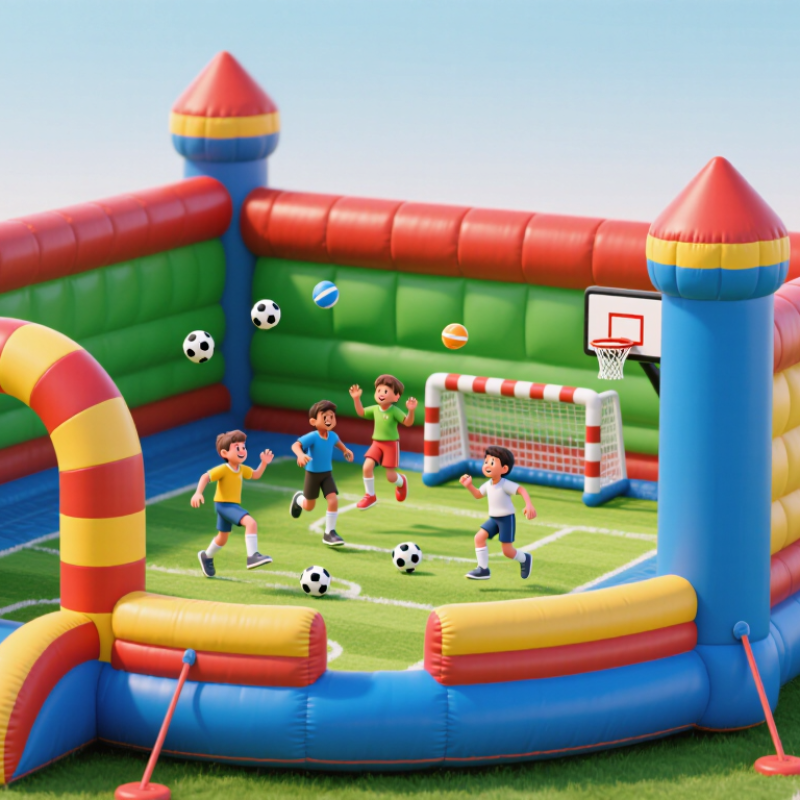
A sports arena bounce house is an inflatable play space designed around familiar sports themes. It may include printed court lines, soft goal targets, basketball hoops, or open areas for bouncing. Features vary by model, so the name does not guarantee a particular layout. Some units focus on jumping; others add simple ball games. Air keeps it firm.

A blower sends a steady flow of air into the structure while small openings release excess pressure. Before use, an operator places the unit on a suitable, level surface, secures its anchor points, and checks the blower and seams. That matters. The entrance, exits, and surrounding space should stay clear, and children need active supervision. Follow the unit’s capacity and operating instructions, especially in changing weather. A printed court may look realistic, but it does not make the bouncing surface behave like a real sports floor. Balls can roll unpredictably, and crowded play can become rough. A careful setup helps, though no inflatable removes every risk.

2026 Top Sports Arena Bounce House for Sale — What It Is and How It Works

A sports arena bounce house is an inflatable play space for activities such as bouncing and ball games. A blower continuously sends air inside; controlled air loss through seams and vents helps the structure stay inflated while giving underfoot. The chart shows an illustrative 10 m × 8 m planning layout—not a universal product specification or safety-clearance standard. Areas are calculated from the dimensions shown.

Key Design Features of 2026 Sports Arena Bounce Houses

A 2026 sports arena bounce house should feel like a compact playing field, not a crowded obstacle course. Clear zones for basketball, soccer, or free play help children understand where to move. Wide entry points, visible exits, and mesh panels make supervision easier. Small details matter.

Anchoring and construction deserve equal attention. Look for reinforced seams, secure anchor points, and a blower matched to the unit’s specifications. ASTM International’s F2374-22 practice covers the design, manufacture, operation, and maintenance of inflatable amusement devices. It offers a useful reference, but buyers should still request product-specific setup and inspection instructions.

Safety data makes these choices tangible. A 2015 U.S. Consumer Product Safety Commission report estimated 113,272 emergency-department-treated injuries associated with inflatable amusement attractions from 2003 through 2013. That figure covers inflatables broadly, not sports arenas alone. For busy events, ask about occupancy guidance, anchoring requirements, and routine seam checks. No layout fits every crowd; even a well-planned arena can feel cramped when age groups and play styles differ. A little extra open space may be more useful than another feature.

Popular Arena Themes, Sizes, and Configurations

Sports-arena bounce houses turn familiar games into active play. Popular themes include soccer, basketball, and multi-sport courts, with goal targets, scoreboards, and team-color panels. SFIA’s 2024 Topline Participation Report found that 242.3 million Americans—78.8% of people aged six and older—participated in at least one sport or fitness activity in 2023. This is not bounce-house sales data, but it shows how widely sports resonate. Keep graphics clear enough to recognize across a gym or lawn.

Choose a size based on the footprint and the usable play area. Compact units can suit smaller parties, while larger arenas may include slides, climbing walls, or separate jumping and shooting zones. Check ceiling height, entry clearance, blower placement, and sightlines for supervision. A large unit can look impressive. More isn’t always better. Crowded queues can disrupt play, so measure the site and allow space for movement around the entrance.

Tips: Ask for inflated dimensions, not just packed size. Request a floor plan and confirm which accessories are included. Theme art cannot fix a poor layout—a detail that is easy to overlook.

Safety Standards, Setup, and Routine Maintenance

For a 2026 sports arena bounce house, safety starts before the blower is switched on. A Pediatrics study estimated 64,657 inflatable-bouncer injuries among U.S. children treated in emergency departments from 1990 to 2010 (Benjamin et al., 2012). That figure makes setup and supervision more than routine details. Check that the unit’s documentation identifies applicable ASTM F2374 requirements, and follow the manufacturer’s instructions for occupancy, anchoring, and weather limits. The standard is a useful benchmark, not a substitute for reading the actual setup manual.

Choose a level surface away from fences, poles, and overhead wires. Lay out the unit fully, inspect seams and netting, then secure every anchor point specified by the manufacturer. Keep the blower intake clear and its power connection protected from foot traffic and moisture. Allow space around the entrance. Keep it uncluttered. Assign an attentive adult to manage entry, separate users by size when needed, and stop play if wind rises or the unit shifts. Small details matter; in a busy arena, they are also easy to miss.

Before each operating day, check stitching, anchor loops, floor wear, and the blower hose for tears or looseness. Clean and dry the structure before storage to limit mold and material damage. Record inspections, repairs, and unusual movement in a maintenance log. A quick glance is not enough. If damage appears, take the unit out of service until a qualified repair is completed. Even careful routines can miss things, so review the checklist regularly.

2026 Top Sports Arena Bounce House for Sale - Safety Standards, Setup, and Routine Maintenance

Category Check or data dimension Practical requirement What to verify
Purchase review Design and operating documentation Request the operating manual, setup instructions, inspection guidance, and applicable product safety documentation before purchase. Check whether the design and operation are addressed by the applicable edition of ASTM F2374 and local amusement-device requirements. A reference to a standard is not, by itself, proof of certification or regulatory approval.
Capacity and fit Occupant limit, user height, and installed footprint Use the limits and clearance distances specified for the particular unit; there is no single safe occupant limit or clearance figure for every arena bounce house. Confirm that the posted occupant limit, age or height restrictions, inflated dimensions, and required safety perimeter suit the site and expected users.
Site selection Surface and overhead clearance Choose a level site with adequate space, away from overhead wires, branches, sharp objects, and other hazards. Follow the manual on suitable surfaces and slopes. Measure the full operating area, including entrances, exits, anchor locations, and the manufacturer-specified safety zone.
Anchoring Anchor points and anchoring method Secure every designated anchor point using the method and equipment specified for the surface and unit. Do not substitute improvised anchors. Confirm the manual’s anchor layout and approved stakes, ballast, or other anchoring system. Recheck anchors during operation.
Inflation system Blower compatibility and air supply Use the blower size and electrical supply specified by the manufacturer. Keep the air intake clear and the blower secured against movement. Inspect the blower, power cord, connections, and inflation tube for damage, obstructions, or loose fittings before each use.
Electrical safety Outdoor power and cable routing Use electrical protection and connections suitable for outdoor conditions, as required by the manual and local electrical rules. Keep cables away from walkways and water. Have a qualified person address damaged wiring or electrical faults; do not operate equipment with exposed conductors or unsafe connections.
Weather limits Wind, rain, and lightning Follow the unit’s stated weather limits. Stop use and secure or deflate the unit as directed if conditions exceed those limits or become unsafe. Do not rely on a universal wind-speed threshold: permitted limits vary by design and instructions. Never operate during lightning or when wet conditions make use unsafe.
Supervision Attendant and user control Provide active supervision while the unit is in use. Enforce the posted capacity and user restrictions, and keep users from climbing walls or overcrowding entrances. Keep the rules visible and ensure the attendant knows the emergency shutdown procedure and how to clear the unit safely.
Pre-use inspection Before each operating session Inspect seams, fabric, netting, anchor points, blower, inflation tubes, and safety labels. Do not use the unit if a defect could affect safe operation. Record the inspection and take damaged equipment out of service until it has been properly repaired and checked.
Cleaning and hygiene Routine cleaning and drying Clean using materials and methods compatible with the unit. Allow it to dry as instructed before storage to help prevent mildew and material damage. Remove debris promptly and follow the manufacturer’s directions for cleaning products, disinfecting, and storage.
Scheduled maintenance Periodic detailed checks Set a documented maintenance schedule based on the manual, frequency of use, and applicable local rules; inspect more often after heavy use, transport, or severe weather. Use qualified repair methods and compatible materials. Reinspect repaired areas before returning the unit to service.
Storage and records Deflation, packing, and maintenance history Deflate, clean, dry, and pack the unit according to its instructions. Store it in a clean, dry place protected from pests and avoidable damage. Keep inspection, cleaning, repair, and incident records so recurring issues can be identified and addressed.

Safety note: The manufacturer’s instructions and applicable local regulations take precedence. Requirements can vary by unit design, site, and jurisdiction.

How to Compare Sports Arena Bounce Houses for Sale

2026 Top Sports Arena Bounce House for Sale

Comparing sports arena bounce houses for sale takes more than checking price and colors. Start with the actual setup area, including clearance around the unit for entry, exit, and supervision. Measure doorways and ceilings if the arena will be used indoors. Then compare inflated dimensions, recommended user capacity, and age or height guidance from each seller. A busy-looking play zone can feel cramped in real use.

Look closely at the construction details. Ask for material specifications, seam reinforcement information, blower requirements, and written setup instructions. Check whether the package includes stakes or other anchoring equipment suited to your intended surface. For indoor use, confirm the unit can be secured safely without ground stakes. Request care, cleaning, repair, and warranty details in writing. Photos help, but they cannot show every seam or explain how replacement parts are handled. That part is easy to overlook.

Tips: Compare quotes with the same checklist. Ask how many people can play at once, and whether that limit changes by age or activity. Check delivery costs and setup support, too. If an answer is vague, pause and ask again. A lower price may be tempting, but unclear specifications make a fair comparison harder. Sometimes the simplest model is the better fit.

FAQS

What is a sports arena bounce house?

It is an inflatable play space with sports-themed details, such as court lines, soft goal targets, or basketball hoops. Layouts vary.

How does it stay inflated?

A blower supplies steady air while small openings release excess pressure. The blower must match the unit’s specifications.

What features help children move around?

Clear play zones, wide entrances, visible exits, and mesh panels can make movement and supervision easier. Small details matter.

How should the play area be prepared?

Choose level ground, secure the anchor points, and keep entrances and exits clear. Check the blower and seams before use.

Can it be used indoors?

Possibly, if the room has enough clearance and the unit can be secured safely. Check ceiling height, doorways, and anchoring instructions.

How many children can play at once?

Follow the unit’s capacity guidance. Age, size, and activity can affect how crowded the space feels. More room may help.

What should buyers compare besides price?

Compare inflated dimensions, capacity, material details, blower needs, setup instructions, and anchoring equipment. Ask about cleaning, repairs, and replacement parts.

Does a sports-themed surface behave like a real court?

No. Balls may roll unpredictably, and crowded bouncing can become rough. Active supervision still matters; an inflatable cannot remove every risk.

What if a seller gives vague setup information?

Ask again and request written instructions. Photos can show the play area, but they may not explain seam checks or repairs. I might overlook a detail, too.

Conclusion

A Sports Arena Bounce House brings the energy of a game-day venue to an inflatable play space. Its enclosed bouncing area, sports-inspired graphics, and optional features such as goals, obstacle sections, or interactive games can create an engaging experience for parties, community events, and recreation programs. In 2026, buyers can choose from different themes, sizes, and layouts to suit the available space, expected number of users, and type of activity.

Before choosing a model, compare its dimensions, materials, construction, included accessories, and intended use. Check that the setup instructions are clear and that the product is designed for safe operation. Use it on a suitable surface, secure it as directed, supervise participants, and follow the recommended capacity limits. Routine inspections and cleaning can help keep the inflatable in good condition. Considering design, setup needs, maintenance, and overall value makes it easier to find an arena-style bounce house that fits your plans.


Amelia

Amelia

Amelia is a seasoned marketing professional with a wealth of expertise in our company’s core offerings. With an unwavering passion for driving growth and innovation, she plays a pivotal role in shaping our marketing strategies and enhancing brand visibility. A key aspect of her responsibilities......